Posted on May 30, 2015 by Biblical Guy
Churches that are healthy are centered around and led by biblical principles and solid doctrine.
Unhealthy churches tend to be led from an attitude of church sociological trends and pragmatism that ignores classic Christian theology.
Filed under: Uncategorized | Leave a comment »
Posted on May 16, 2015 by Biblical Guy
· Churches that are healthy have pastors and leaders who are equipping others to serve, doing so with care and kindness; they see their people as participants in the ministry of the church.
· Unhealthy churches tend to see their people as consumers, not participants.
Filed under: Uncategorized | Leave a comment »
Posted on March 20, 2015 by Biblical Guy
Youth leaders, join and post to our BLOG!
By you writing a post for our blog, we can do three very important things:
1. We can provide youth and youth leaders with high-quality training content year-round.
2. We can provide a platform to expand your ministry reach to readers around the world.
3. We can expose people to your insights, which could drive more people to your future sessions at CMTA and Divergent.
We are asking every presenter from last year and at this year’s conference to help us accomplish this goal by writing a brief (300-600 word) summary of your assigned conference topic on the document template provided.
Also any leadership training materials we will make pages for.
BE A PART OF THE Divergent BLOG
Instructions will be emailed to you, if you are not on our email list, please PM us…. !
Filed under: Uncategorized | Leave a comment »
Posted on March 20, 2015 by Biblical Guy
DIVERGENT- Not Conformed! IMPACT Student Conference
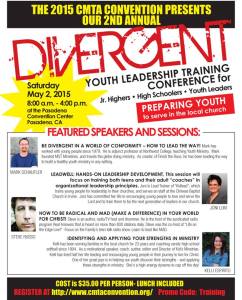 Saturday, May 2, 2015
Pasadena Convention Center
Filed under: Uncategorized | Leave a comment »
Posted on March 14, 2015 by Biblical Guy
Churches that are healthy are making disciples for the transformation of the whole person, both faith and personal life.
Unhealthy churches tend not to be interested in making disciples and thus its people experience little or no renovation of faith in their church or personal life.
Filed under: Uncategorized | Leave a comment »
Posted on March 14, 2015 by Biblical Guy
Posted on March 7, 2015 by Biblical Guy
Churches that are healthy have a sense of allowing God to work in and through their people to build a healthy, loving community.
Unhealthy churches tend to coerce and manipulate or micromanage their people, which does not build a healthy community.
Filed under: Uncategorized | Leave a comment »
Posted on February 26, 2015 by Biblical Guy
· Churches that are healthy allow its people to know and exercise their spiritual gifts, and the strongest churches mentor their people further in them.
· Unhealthy churches tend to ignore its people’s gifting and talents.
Filed under: Uncategorized | Leave a comment »
Posted on February 26, 2015 by Biblical Guy
· Churches that are healthy are pursuing the purpose for which God has created and called them to.
· Unhealthy churches tend to pursue the purpose the leaders want, personal agendas that are usually contrary to God’s will and precepts or are unrealistic or ineffective.
Filed under: Uncategorized | Leave a comment »
Posted on February 1, 2015 by Biblical Guy
· Churches that are healthy have a strong sense of biblical value for faith in the practice of church and personal life. The Bible is real and relevant in the life of the leaders, so it is taught as well as caught from one another.
· Unhealthy churches tend to have a weak sense of biblical worth and see faith as just personal, not practiced in the life of the church. The Bible is seen as unrelated to church leadership and thus they seek substitutes from non-biblical or psychological/cultural sources.
Filed under: Uncategorized | Leave a comment »


 Acts29.org