

DIVERGENT- Not Conformed! IMPACT Student Conference
 Saturday, May 2, 2015
Pasadena Convention Center
Filed under: Uncategorized | Leave a comment »
DIVERGENT- Not Conformed! IMPACT Student Conference
Saturday, May 2, 2015
Pasadena Convention Center
Filed under: Uncategorized | Leave a comment »
 The principal factor that grows our churches and glorifies the Lord is not chasing a numbers paradigm or the latest trend. Rather, it is all about how we love with the impacting Gospel of our Lord that is preached uncompromised with the power of the Holy Spirit.
Then we bring it with the conviction of the true Truth of God’s Word, and the clarity of the reverence and relevance of our Lord moving in our lives. These are the precious items we bring to build our church in God’s Way!
Love is. The primary Greek word is Agape, which means “self-giving” and “sacrificial,” that is more concerned with others than self. It was used in Classic Greek literature to refer to someone who was generously favored by a god. It conveys the idea of a person giving all his or her love, or favor, to someone else rather than to self. It is a love that is not earned; in contrast, it is relational and given freely. The word “Love” also refers to parents giving all of their love for their child.
In the New Testament, agape love was used to make a similar point, as God gives to each of us all of His love.
Real love goes deeper and further, as a deep adoration that is bestowed without expectations of a response from the other. Agape love is also the most common word used both as a noun and a verb in the New Testament. The greatest example of agape love is what our Lord Jesus Christ did when He died for our sins.
Consequently, God’s agape love gave us His forbearance and rescue from the punishment that we deserved. Rather than receiving what we should have, we received His favor without earning it.
(Deut. 6:5; Joshua 24:14 -15; Isa. 44:9-20; Mark 12:28-31; John 3:16; 21:16; Matt. 22:34-40; John 3:16; 13:1, 34-35; 14:1; 15:9; Rom. 1:31; 5:8-10; 8; 12:10; 13:11-14; 1 Cor. 7:32-35; 13; 2 Cor. 1:21-22; 5:5 Gal. 5:5; Eph. 2:4-7; Phil. 2:2; Col. 1:1-6; 3:5, 12-14; 1 Thess. 1:3; 2:8; 3:6; 12; 4:9-10; 5:8-13; 2 Tim. 3:3; Heb. 10:24; 1 John 4:7-12).
All men will know that you are my disciples. When we love one another, we prove and exhibit Christ!
This is our “mark,” the prime characteristic that makes us friendly and connectable to others, and how we are to be known-by what Christ does with us and calls us to. We are to love one another-period! No strings attached! This is the mold for the form that we use to display God’s love to the world (John 13:34-35; 15:13-17; 2 Cor. 5:20; Gal. 5:22; 1 John 2:10; 3:14-16)!
How do we know if this is working? This is exhibited in the form of the example from Whom our Lord is being lived out in the leaders lives. Then we can examine our practice with this question, “do you use people, or do you serve them?” Remember, Jesus was God, who came to this earth to love and to serve (John 13-14; 18:15-27)!
Thus, we do not aim at our people with numbers or manipulate them to whatever the latest business model or schema, we present the Gospel of God’s true Truth in love by teaching it and by living it out. Then we grow our churches, God’s Way.
What is real love? How is it shown by the fruits of it, like humility and service?
Filed under: Building a Fruitful Church, Church Growth Ideas | Tagged: Agape, Church Growth, clarity, conviction, exhibit Christ, glorifies the Lord, grows our church, Holy Spirt, impacting Gospel, love, numbers, paradigm, real love, Relevance, reverence, sacrificial, serve, trend, true Truth, uncompromised | 1 Comment »
Churches that are healthy are making disciples for the transformation of the whole person, both faith and personal life.
Unhealthy churches tend not to be interested in making disciples and thus its people experience little or no renovation of faith in their church or personal life.
Filed under: Uncategorized | Leave a comment »
Churches that are healthy have a sense of allowing God to work in and through their people to build a healthy, loving community.
Unhealthy churches tend to coerce and manipulate or micromanage their people, which does not build a healthy community.
Filed under: Uncategorized | Leave a comment »
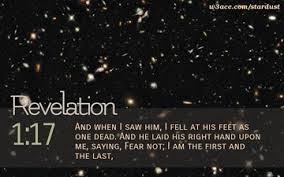
Read Revelation 1: 17-20
“… When I saw him, I fell at his feet as though dead…” Revelation 1: 17
Why is it important that when we run our churches, we do so with God’s power and precepts leading us and not our ways or trends?
Read Revelation 1: 17-20. What do you see in this passage that you can apply to your church today? Consider, what should be the essential framework to build your church into a healthier church? And then compare it to what are you doing now and what was done in the past?
We are shown a plan. Christ, with His full mercy and grace, allows John to stand, gives him comfort, and gives him the important task of recording His precepts. We are shown Who and What our Living Lord is and does. Then we respond by living it out, preaching it out and follow-through it all out. Take a look at verse 19, it is interesting; it may set a tone for the meaning of Revelation, not necessarily literally, but as imageries that have a meaning for a purpose that is for us now and will still be so in its culmination.
In the Upper Room, John reclined with Jesus for His last Supper and leaned on Him to show his devotion and love (John 13:32). Now, he falls at his feet. Jesus shows John His love by helping him stand. The lesson for us is we must understand the importance of reverence. We come before a holy God. He is not just a pal or friend or guide to dispense feel good sound bites; rather, He is our Savior and our Lord (2 Cor. 5:16). He has the keys in His hand; we have no need to fear our future when He is our Light, Guide, and Lord!
This is Who we bow to, Who we proclaim, Who we teach about and inspire and equip our people too.
The hair on his head was white like wool, as white as snow, and his eyes were like blazing fire.
Let’s see what the Word has to say with these key words:
“Fell at his feet” is an attitude and posture of great respect and awe. This can also mean the terror that was felt until the Angel touched and relieved them (Gen. 15:12; Deut. 3:2; Josh. 8:1; Jer. 1:8; Ezek. 1:28; 11:13; Dan. 8:18; 10:10; John 6:35; Rev. 4:10; 5:8; 7:11; 19:10; 22:8).
“I am the First and the Last” is the same as the Alpha and Omega in verse eight. Christ is eternal and fully God in all areas, attributes, power, character, and sovereignty (Isa. 44:6; 48:12; Rev. 2:8; 22:13).
“Living One” refers to the resurrection and the triumphant Christ as the living God who gives us life, and then new life, renewal, and reason, and how He will renew the entire world. This is a contrast to paganism and the “gods” of wood and metal who are lifeless, careless, petty, and meaningless; our God is living and involved (Jos. 3:10; Psalm 42:2; 84:2; Isa. 41:4; 44:6; 48:12; Rev. 2:8; 5:9; 20:4-5; 22:1-2).
“Keys of death and Hades” indicates that Christ is in absolute control over all domains and also points to His future role. Hades is the general realm of the dead; thus, Christ’s power is all encompassing. Keys were a symbol of power and influence. The one who held the keys was the authority and the one in control. It is very encouraging to those who are facing death to know that Christ is there and in control, and can open those gates at any time, including at the last days (Psalm 9:13; Isa. 22:21-22; Matt. 16:18; Acts 2:27-31; Rev. 20:14).
“What is now and what will take place later” indicates past, present, and future, and refers to what is in Revelation references. It is for the present and future as well as rooted in the past, but not completed as of this writing. This can also refer to Revelation being divided into three parts: past in chapter 1:12-16, present in chapters 2-3, and future in chapters 4-22. However, each section contains content of all three “then, now, and later,” and does not necessarily refer to the entire structure of the Revelation (John 19:35).
“The mystery,” this does not mean something not understandable or hidden; rather, it is something known to God that He reveals to us in His good time. We cannot guess what we do not know; however, Christ does know. Here, John plainly tells us the meaning, just as Jesus did with the parable of the sower (1 Cor. 2:7; 2 Thess. 2:7).
“Angels,” meaning “messengers,” can mean people used by God to convey His message, such as pastors, or heavenly beings who live and work in Heaven. We are to realize our place and position to be holding on to Christ. The context seems to indicate the latter. Or, it can mean the significance of the churches in Heaven, that they are spiritual entities. This can also mean the prevailing characterization of the theme and “spirit” of each church or a “guardian angel.” In all practicality, it could refer to the seven different messengers John is sending with copies of his Epistle (Dan. 10:10-21; Matt. 18: 10; Luke 7:24; 9:52; Rev. 1:11; 10:1; 22:6).
So what does this come down to? An indicator to see what is the condition of your church?
Is He properly reverenced and referenced, taught about and honored, or is He just a self-help guide?
Does Jesus control your church or do you or others think they do? How is your light shining before others?
Our Light is Christ and we are called to show Him in our lives and in our Church! How can you do this better?
Filed under: Revelation and Church Leadership | Tagged: accountable, Alpha and Omega, Fell at his feet, First and the Last, God's power, I am, indicator, Living Lord, mercy, mystery, Revelation, Revelation and Church Leadership, reverenced, Trends, Upper Room | Leave a comment »
· Churches that are healthy allow its people to know and exercise their spiritual gifts, and the strongest churches mentor their people further in them.
· Unhealthy churches tend to ignore its people’s gifting and talents.
Filed under: Uncategorized | Leave a comment »
 How we are to see Christ
Revelation 1: 12-16
The hair on his head was white like wool, as white as snow, and his eyes were like blazing fire.
How would you react if Christ appeared to you as He did with John in this passage? How would this affect the way you lead and manage your church? What can this attitude do to help you be more reverent to Christ in your daily life?
The image of Christ in this passage is breathtaking. It is not that of the humble servant, Son of man; now it is the immeasurable Sovereign of the universe standing in the heavens, holding the stars. If you have a basic understanding of modern astronomy, you can begin to see this wonder. He was blazing as radiantly as the sun with a voice that thundered as He held the Churches in His grip. John’s only response was to fall face down as dead in total reverence and humility to Christ’s Lordship. Just as we must do when we see Who we serve and Who we give glory to.
A testimony to how we are to see Christ, as LORD, over all, our lives belong to Him, we serve in His church!
Let’s see what the Word has to say with these key words:
“Lampstands.” The image that God is Light refers to the Church as the body of believers and whose duty it is to be a light as a witness for Christ. His character is the Light we follow and proclaim. Christ is the Priest, Head, Lord, and Prime Shepherd of the Church. He is the Object and Reason why we meet and function.
This is what we must get, Who we serve, why we serve, and how we are to serve!
This refers to the O.T. account of how God’s Glory descended into the Tabernacle. How He loved and gives His presence to His Church. Now, our purpose is to point to His glory, as the Church is the light of the world. Christ is the destiny and pattern we follow and emulate. Proclaiming the Church as a lamp stand is saying the Church is significant as the true place of reverence to God, and Christianity is the true practice of Judaism (Gen. 1:3; Ex. 25:31-40; 1 Kings 7:49; Zech. 4:2; Matt. 5:14-16; 18:20; 28:20; John 1:4-5; 8:12; 14:18; Acts 26:13; Eph. 1:10; 5:8-13; Phil. 2:15; 1 John 1:4-5; Rev. 2:9; 3:9).
“Like a son of man,” refers to His supremacy, distinction wisdom, honor, respect, dignity and role as Lord Ruler and Love for the believer. Christ appears in overwhelming brilliance and glory that was extremely difficult to put into words, as the world cannot contain His essence. The high priest was dressed in expensive, decorative, full-length girdles and robes. This alludes to Ezekiel and Daniel and portrays Christ as Judge and Ruler over all, especially the Church in which we think we rule. These key words refer to His Glory, Deity, and the victory and conquest over sin, and His guarantee of the final victory in the last days. It also refers to Christ being our High Priest. In context, this is also powerful Trinitarian imagery (Ex. 28:4; 29:5, 29; Lev. 19:32; Ezek. 1:13, 25-28; Prov. 16:31; Isa. 1:18Dan. 7:9-13; 10:5-6; Ezek. 1:25-28; Mark 8:31; Col. 1:16-17; Rev. 1:17-18; 2:27; 3:21;15:6; 17:14; 19:11-16).
“Blazing fire” means God’s penetrating insight and strength, His Sovereignty as Warrior, and His role as victor in the final battle to come. It also refers to the great victories of battle in the O.T. This points to the Transfiguration (Ex. 15:3; Duet. 32: 41-42; Judges 5:31; Isa. 59:17-18; Zech. 14:3; Dan. 10:6; Matt. 13:43; 17:2; Rev. 4:6; 19:11-21).
“Bronze… feet” means bearers of God’s throne, and that God is irresistible and firm (Ezek. 1:7; Dan. 10:6)
“Seven stars.” Jewish texts often display angels as stars. In contrast, pagans saw stars as the rulers of their destiny when, in fact, God, who is LORD is that ruler.
“Double-edged sword” refers to the Roman “Thracian” sword that a small double edge dagger used as an offensive weapon, it is referring to the power of His Word and the testimony of our Lord. It symbolizes His divine judgment and decisive action (Isa. 4:12; 11:4; 49:2; Eph. 6:17; Heb. 4:12; Rev. 2:12, 16; 6:8; 19:15, 21)
“Sun.” Angels are sometimes described as shining like the sun (Isa. 60:1-3, 19-20; Dan. 10:6; Rev. 21:22).
Obviously, this is a figurative, not a literal description of our Lord! Christ is shown as Supreme, and Head over the Church. He controls the Church. Does He control yours, or do you think you do (2 Cor. 3:18; Eph. 4:13-15; 5:23; Col. 1:15-20; 1 Tim. 3:1-7; Tit. 1:5-9)?
This passage displays God’s splendor in the best symbolic words and imagery available following Daniel chapter seven, where mere words are insufficient to convey who He is.
Look carefully at these key words. Let them remind us of Who we are to worship, and motivate us in the day to day activities as we give direction and leadership the sheep of His Church. (Rev. 5:6; 14:14; 19:11-13).
What does it mean to you and your faith that Jesus is the ultimate Priest, Judge, King, and Ruler of the Church?
How and why is it important for a leader to lead by example by going first to the destination to which they are leading others? Can someone lead effectively if they have never been there before, such as teaching of character yet not having it?
What is the image of Christ to you in this passage? How does this give you more information so you can have a better, healthier concept of who God is? How can this translate into your daily life?
Filed under: Revelation and Church Leadership | Tagged: as LORD, blazing fire, Christ, Head, humble servant, Lampstands, Lord, Priest, Prime Shepherd, purpose, Revelation, Revelation and Church Leadership, Son of man, Sovereignty, testimony | Leave a comment »
· Churches that are healthy are pursuing the purpose for which God has created and called them to.
· Unhealthy churches tend to pursue the purpose the leaders want, personal agendas that are usually contrary to God’s will and precepts or are unrealistic or ineffective.
Filed under: Uncategorized | Leave a comment »

The first vision! Revelation 1: 9-11,
… John, your brother and companion in the suffering and kingdom and patient endurance that are ours in Jesus…
What does it mean to you to shine before God? How does holding His true Truth help you shine and make Him known in a dark world?
Jesus is proclaimed as the Priest, Judge, King, and Ruler of the Church. This is not theory, rather, reality with which we must connect. This is also our template how we view, understand and undertake the management of His Church. That He IS, and what we do is for Him.
The context is that John is getting his people ready for his visions. To do so, John is demonstrating humility, making a connection to his people so they can have hope and endurance by the sharing of his sufferings and experiences and they will know he is still with them in spirit and in understanding. This is what we are doing as we disciple and proclaim the glory of our Lord.
John was not living the good life while his people were being persecuted; he was in the frontlines of it all. He was a leader who led by example by going first to the destination to which he was leading others. Now that he has set a tone, he tells them of his incredible vision of Christ and His call to the leadership of the Seven Churches. Jesus is speaking to him in vivid imagery, commanding him to write it all down so it can be shared and used to further the Kingdom.
This means we lead from the front. Not in the rears barking orders or giving suggestions that we have no experience or intention of doing.
John is addressing all Christians, not just the seven churches, because the seven means “completeness” and represents us all. John is making it personal and caring, yet forceful in function. He gives a call to remain faithful and keep our trust in Christ no matter what comes our way in sufferings or temptations. In so doing, we are to focus on His Way, even in persecution and stress (Rev. 2:2-3, 13, 19; 3:10; 6:11; 13:10; 14:12; 16:15; 18:4; 20:4; 22:7, 11, 14).
Let’s see what the Word has to say with these key words:
“The Lord’s Day” was a covert term to mean when the Early Church met for worship. It refers to the day of worship, Sunday, where Christ’s resurrection, victory, and Last Supper were celebrated. Many Christians were Jews and still participated in the Sabbath observances, too (John 20:19; Acts 20:7; 1 Cor. 16:2; Rev. 19:1-10).
“In the Spirit” means “spiritual exaltation,” possibly as in charismatic worship. However, John did not solicit this vision; God gave it to him. The Holy Spirit provided John the visions and took him to places he could actually see. Thus, he is recording authentic images he saw in reality; this was no dream (1 Chron. 25:1-6; Ezek. 2:2; 3:12-14, 24; 8:3; 11:1, 24; Acts 10:10; Rev. 4:2; 17:3; 21:10).
“Loud voice” refers to the power of Christ and our duty to reverence Him (Job 37:5-6; Ezek. 1:24; 43:2; Dan. 10:6).
“Trumpet” means God is preparing to give a command or the pronouncement of His Word (Ex. 19:16).
“Seven churches.” These are not allegories, but rather real, actual churches in Asia Minor (Modern Turkey) whose tangible problems are the representation of the ones we still have with us today. There were many more churches in Asia Minor at that time, as seven is symbolic for completeness, and thus applies to all churches in all.
In the Old Testament Tabernacle that Moses built and where the Jews first worshiped God, there was one lampstand with seven branches (in practice some Jews use six to nine branches, so not to duplicate anything that was in the Temple). This is now called the “menorah,” a prime symbol of Judaism today and used in “Chanukah.” This Menorah had seven branches that symbolized the assembly of believers and how God’s light shines to us and how we are to be the ‘shine’ in others’ lives (Ex. 25:31-40; Isaiah 42:6; Zech. 4:1-6; Matt. 5:16; Phil. 2:14-16).
The Bottom-line of how we are to lead and manage the church from the precepts of Revelation, is that it also points us that it is God’s power that leads, not our ways or trends.
The essential framework to build a healthy church is to understand that its prime purpose is to glorify Christ, not to please our comforts or ideas. Or bow to a personality, giving a dog and pony show. We are to shine before Christ by holding His truth, and shine for the Lord, making Him known in a dark world!
Who is Christ in your life? How is He reverenced in your church? (Not so much in worship, but in the attitude of veneration in the leadership.) This would mean, how Jesus is adored in the reality of relationships, attitudes, and daily functioning of how we are conducting our lives and church. This can be the indicator if you are on the right track or lost in pride.
Filed under: Revelation and Church Leadership | Tagged: connection, endurance, focus, His Way, hope, humility, In the Spirit, Lord's Day, remain faithful, Revelation, Ruler of the Church, seven churches, shine before God, sufferings, understanding, vision | Leave a comment »

 Acts29.org